The American government has, in recent years, has attempted to pass many acts to stop piracy, namely:
- Anti-Counterfeiting Trade Agreement (ACTA):
- PROTECT IP Act (PIPA):
- Stop Online Piracy Act (SOPA):
ACTA takes the form of a multinational treaty with the intent of establishing and enforcing intellectual property rights. A forum similar to the World Trade Organization or United Nations would thus be created. Originally created in Japan, ACTA was drafted in November 2010 and was signed in October 2011 by countries such as the United States, Singapore, Mexico, and Canada. Numerous crticisms have appeared in regards to the bill, mainly claiming a restriction on freedom of expression and communication privacy. In Poland, many websites were shut down as a result of ACTA, to which the public responded with protests, with 97% of parliament opposing the treaty in the end.
Preventing Real Online Threats to Economic Creativity and Theft of Intellectual Property Act, commonly referred to as PIPA, was first introduced in May 2011. PIPA would act against rogue websites if instated, and defines piracy as "distribution of illegal copies, counterfeit goods, or anti-digital rights management technology", and if any website is found to engage or suggest engagement in that activity, its domain would be removed from the DNS (Domain Name System). As such, any attempt to access the website would make it appear as though the website did not exist. As censorship is a possible result and could result in limitations of freedom of expression, many groups oppose the act, such as Facebook, eBay, Mozilla, Wikipedia, and Google. As such, the vote on PIPA was delayed.
Similar to ACTA and PIPA, SOPA is an attempt to limit piracy. SOPA would enforce restricted access to domains that infringe copyrights through requiring ISPs to block access or from removing the website from a search engine. However, some sections of SOPA are vague and can cause any user-created content to be removed. This is not limited only to images or small programs, but also larger scale games and other online media. As a result of the poorly defined act, censorship is a highly probably result of SOPA. In opposition to SOPA, opponents stated that a single blog or webpage could cause the removal of an entire doman, such as blogspot.com. Met with a large amount of opposition, especially from gaming companies, search engines and databases.
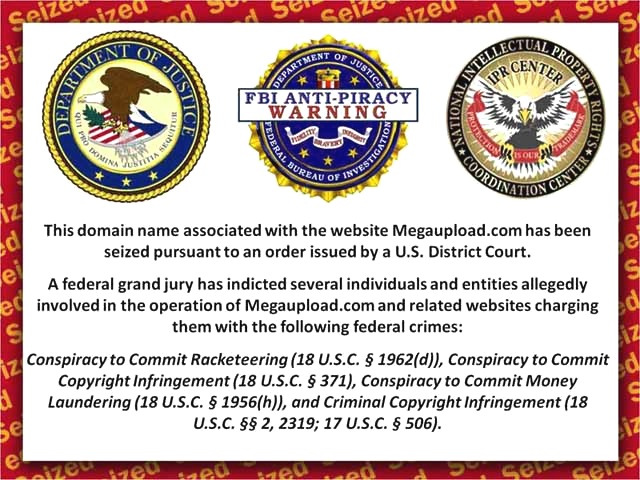
One well known result of govenment action is the closure of popular file hosting service, megaupload.com. Though stating that it acts on piracy swiftly as it violated the Terms of Service, the website was still taken down in January 2012. Claims used to close megaupload.com and related websites included copyright infringement, promoting software piracy, and earning money off of its illegal services. Many file-sharing sites reacted by closing off their services or by further restricting them, whereas others, such as MediaFire, expressed a lack of concern, being 'legitimate' businesses.